
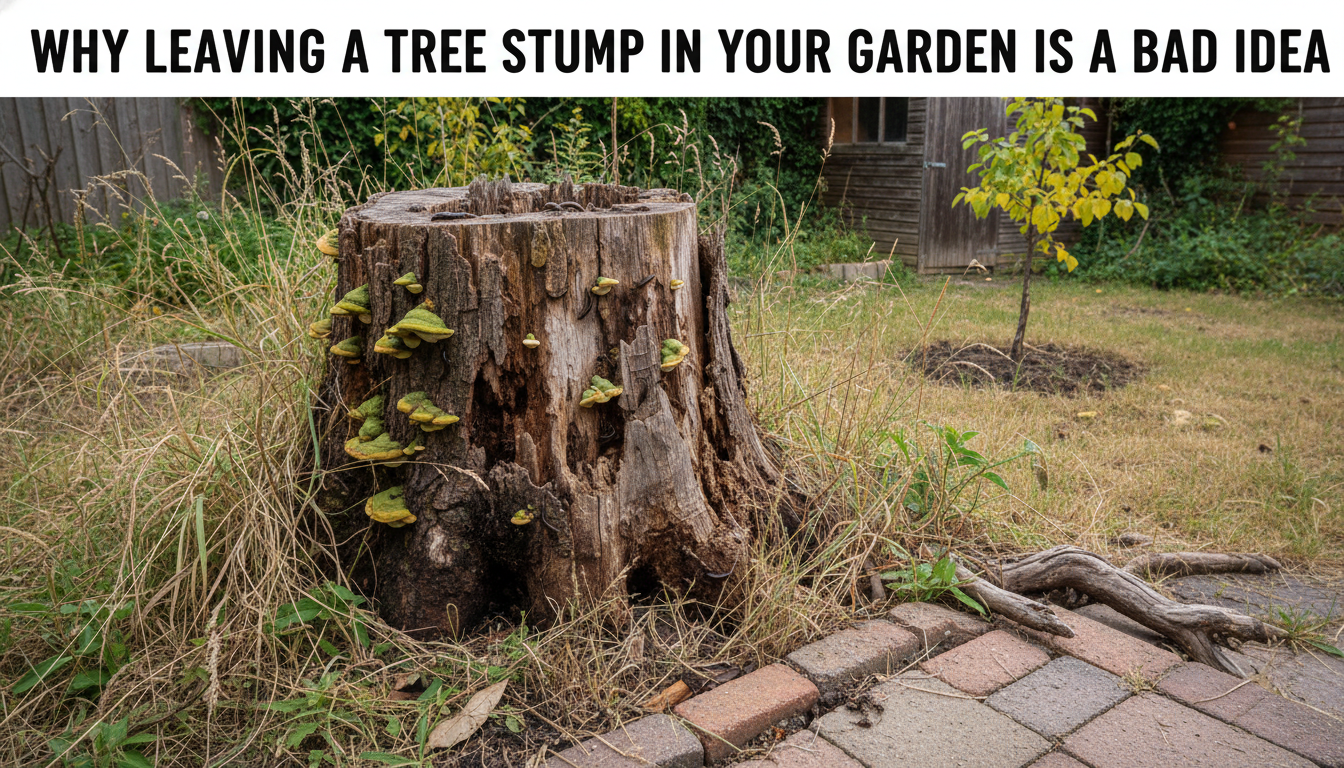
Have you recently had a tree removed from your garden in Hull and decided to leave the stump behind? It might seem like the easiest option at the time after all, it’s just sitting there quietly in the corner. But what many homeowners don’t realise is that a leftover tree stump can quietly cause a whole host of problems, from safety hazards and pest infestations to structural damage and reduced property value.
In this guide, the team at A1 Tree Services explains exactly why leaving a tree stump in your garden is a bad idea and what you should do about it.
It’s a Serious Safety Hazard
One of the most immediate problems with leaving a tree stump in your garden is the risk it poses to you, your family, and visitors. Stumps that are partially hidden by grass or overgrown plants are very easy to trip over particularly for children running about in the garden or adults moving around in low light.
Beyond the risk of trips and falls, stumps can also cause costly damage to your lawn equipment. If a lawnmower blade strikes an exposed stump or surface root, it can be badly damaged resulting in unnecessary repair bills. Removing the stump eliminates these risks entirely and creates a safer, more usable outdoor space for everyone.
Tree Stumps Attract Pests and Insects
As a stump begins to decay, it becomes an ideal habitat for a wide range of unwanted pests. Termites, carpenter ants, wood-boring beetles, and other insects are all drawn to rotting timber and once they’ve settled in, they rarely stay contained to just the stump.
The Risk of Spreading to Your Home
This is where things get particularly concerning. Once a pest colony establishes itself in a garden stump, it can spread to nearby healthy trees, garden structures such as fences and sheds, and in the worst cases, the timber framework of your home. Dealing with a full-blown pest infestation is both stressful and costly, so removing the stump before it becomes a breeding ground is by far the most sensible approach.
Decay and Disease Can Spread to Your Garden
A rotting stump doesn’t just attract insects, it also becomes a fertile environment for harmful fungi and bacteria. Diseases such as honey fungus can take hold in a decaying stump and spread through the underground root system to nearby healthy trees and plants, causing widespread damage that can be very difficult and expensive to reverse.
Impact on Vegetable Gardens and Flowerbeds
If you grow vegetables or flowering plants nearby, the risk is even more significant. Fungal diseases can devastate crops and ornamental beds, wiping out months of careful gardening work. Even after a stump has been removed, fungal spores can linger in the soil, which is why prompt removal is always recommended.
Stumps Can Cause Unwanted Regrowth
Leaving a stump in the ground doesn’t necessarily mean the tree has finished growing. Many tree species, particularly fast-growing or invasive varieties, will continue to push out new shoots from the stump or its root system. These suckers can appear in unexpected places, including through lawns, between paving slabs, and alongside garden paths.
Why Regrowth Is a Problem
Not only is this unsightly, but it also undermines the entire reason you had the tree removed in the first place. Managing these shoots requires ongoing cutting or the repeated application of chemical treatments, adding time and effort to your garden maintenance routine. Removing the stump properly from the outset puts a stop to regrowth before it starts.
The Roots Can Damage Your Garden and Property
Even after a tree has been cut down, its root system doesn’t simply disappear. Roots can continue to expand underground, and over time this can cause significant structural damage to the features around them.
What Can Roots Damage?
- Patios and paving: Expanding roots can push up and crack concrete, stone, or block paving, causing expensive repairs
- Garden paths and driveways: Surface cracking and lifting are common where roots are left unchecked
- Fences and walls: Roots can gradually undermine the foundations of fencing, retaining walls, and garden outbuildings
- Underground drainage: Roots are well known for invading and blocking drainage pipes and irrigation systems, which can lead to damp, flooding, and costly plumbing work
- Flowerbeds and vegetable patches: Roots compete with other plants for water and nutrients, affecting the health of surrounding planting
Professional stump removal addresses the root system as well as the visible stump, eliminating the risk of this kind of progressive damage.
It Affects Your Kerb Appeal and Property Value
Your garden is one of the first things people notice when they look at your home. An old, weathered stump sitting in the middle of the lawn does nothing for first impressions and it can actively put off potential buyers or tenants if you’re looking to sell or let the property.
Stumps signal unfinished work and suggest the garden hasn’t been properly maintained. Buyers will often factor the cost of removal into any offer they make, which means leaving a stump in place could end up costing you more in the long run. Having it removed professionally tidies up the space, improves the look of your outdoor area, and demonstrates genuine care for the property.
Garden Maintenance Becomes a Constant Battle
Beyond the bigger risks, a leftover stump simply makes maintaining your garden harder work. You have to mow around it, strim around it, and deal with the weeds and moss that tend to gather at its base. Over time, this adds up to a significant amount of extra effort and the garden never quite looks as neat and tidy as it could.
Removing the stump frees up space, simplifies your maintenance routine, and opens up new possibilities for landscaping, whether that’s laying turf, installing a patio, planting a new tree, or creating a flowerbed.
What Is the Best Method for Stump Removal?
The most efficient and widely used method of stump removal is stump grinding. A professional stump grinder uses powerful rotating blades to break the stump down into small wood chippings, grinding it to just below surface level. The whole process is surprisingly fast; most stumps can be removed within a matter of minutes and the resulting wood chips can either be taken away or used as mulch.
Why You Should Always Use a Professional
Whilst there are DIY methods available, stump removal is one of those jobs that is always better left to the professionals. A qualified tree surgeon will assess the stump and its surroundings, ensure no underground utilities are at risk, and carry out the removal safely and thoroughly. They will also clear away all debris and leave the area ready for whatever you have planned next.
Book Professional Stump Removal in Hull Today
If you have a tree stump in your garden whether it was left after a recent felling or has been there for years. The team at A1 Tree Services is here to help. We provide professional stump removal services across Hull and the surrounding areas, using the latest grinding equipment to ensure a clean, efficient, and hassle-free result.
Don’t let a stump become a bigger problem than it needs to be. Get in touch with A1 Tree Services today for a free, no-obligation quote.
Comments are closed