
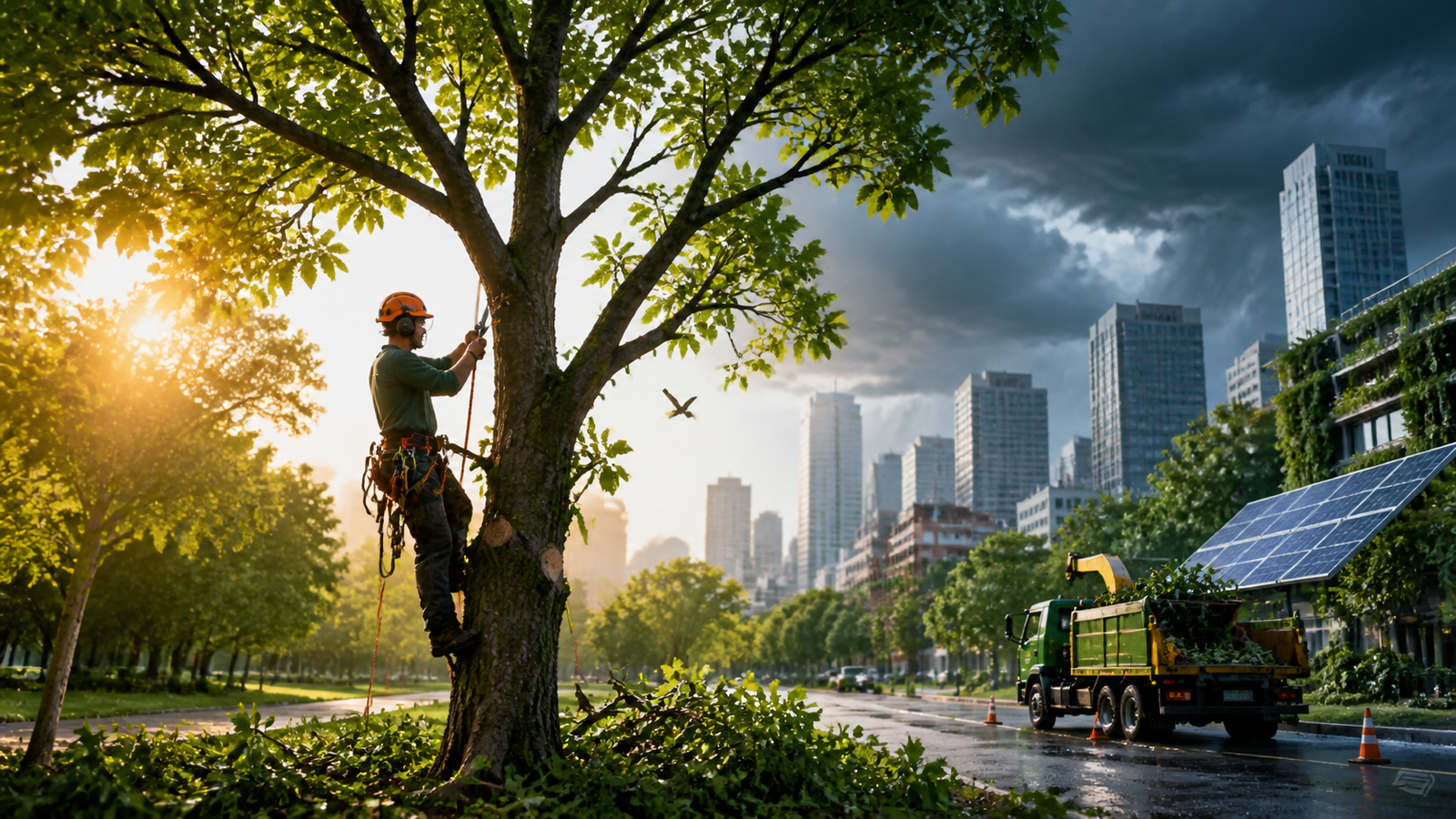
If you’ve been putting off tree maintenance, thinking it can wait until next season, 2026 is the year to reconsider. Across the UK including right here in Hull, trees are facing a perfect storm of challenges: unpredictable weather, aggressive new pests, tightening regulations, and ageing urban canopies that have gone years without professional attention.
At A1 Tree Services, we’ve seen a significant shift in the conversations we’re having with homeowners and property managers. More people are asking not just ‘can you remove this tree?’ but ‘how do I keep my trees healthy for the long term?’ That question matters enormously and this blog explains exactly why.
Whether you have a single oak in your back garden or manage a commercial site with mature specimen trees, this guide will walk you through why proactive tree maintenance in Hull is no longer optional; it’s essential.
1. Hull’s Climate Is Getting Harder on Trees
Extreme weather events are no longer rare. Hull and the wider East Yorkshire region regularly face high winds, prolonged wet winters, and increasingly dry summers. Each of these conditions stresses trees in different ways and cumulative stress is the number one reason a seemingly healthy tree fails without warning.
Winter storms loosen root anchorage. Saturated soils weaken structural stability. Summer droughts stress root systems, making trees more vulnerable to fungal disease and pest attack. When trees haven’t been maintained, these problems compound silently often until a branch fails or a tree comes down entirely.
Regular tree surgery in Hull including crown thinning, deadwooding, and structural assessments acts as vital insurance. It reduces the mechanical load on branches, improves airflow through the canopy, and allows trained eyes to catch problems before they become emergencies.
2. New Pests and Diseases Are a Growing Threat
The UK tree population is under biological pressure unlike anything seen in previous decades. Ash dieback (Hymenoscyphus fraxineus) has already devastated millions of ash trees across England, and Hull’s urban and rural canopy is no exception. Meanwhile, oak processionary moths, Phytophthora root rot, and bleeding canker of horse chestnut continue to spread northward.
What makes 2026 particularly critical is that many of these infections are now well-established in East Yorkshire. Trees that were once on the periphery of affected zones are now at direct risk. Early detection is the difference between saving a tree and losing it and early detection requires regular professional inspection.
Our arborists carry out thorough health assessments as part of every visit, looking for subtle early warning signs that untrained eyes miss. If you’re concerned about a specific tree, our tree surgery services include a full health evaluation before any work begins.
3. Maintenance vs. Removal: Why Proactive Care Saves Money
There’s a common misconception that tree maintenance is an unnecessary expense something you do when you have spare cash. In reality, reactive tree work is almost always more expensive than proactive maintenance.
A crown reduction carried out every three to five years costs a fraction of the price of an emergency tree removal. An emergency call-out especially after storm damage involves complex rigging, site access challenges, and urgent logistics. The cost difference is often three to five times higher.
Beyond the financial argument, tree removal is often entirely avoidable. Many trees that get removed could have been saved with timely intervention. Planting new trees is valuable, but it takes decades for a young tree to replace the ecological value, shade, and aesthetic contribution of a mature specimen. The most sustainable choice is to maintain what you already have.
4. What Modern Tree Maintenance Actually Involves in 2026
Tree surgery has evolved dramatically. Today’s professional arborists bring a combination of traditional botanical knowledge and modern technology to every job. Here’s what a comprehensive tree maintenance programme looks like in 2026:
Crown Thinning and Reduction
Rather than cutting trees back aggressively, skilled surgeons selectively remove specific branches to reduce canopy density, improve light penetration, and lessen wind resistance. Done correctly, this strengthens the tree’s overall structure rather than weakening it.
Deadwooding
Dead or dying branches are removed to eliminate entry points for pathogens and reduce the risk of falling limbs, especially important if your tree overhangs a garden, driveway, or public footpath. See our full tree surgery page for more detail.
Crown Lifting
Removing lower branches improves clearance for vehicles, pedestrians, and structures. It also allows more light to reach gardens beneath the canopy while preserving the overall shape and character of the tree.
Stump Removal
Once a tree has been felled, leaving the stump in place creates ongoing problems — it can harbour disease, attract pests, and become a trip hazard. Our stump removal service in Hull uses specialist grinding equipment to eliminate stumps cleanly, allowing replanting or landscaping on the cleared area.
Hedge Maintenance
Overgrown hedges can shade neighbouring properties, obstruct sightlines, and harbour pests. Our hedge trimming service in Hull keeps your boundaries neat, healthy, and legally compliant throughout the year.
5. How Technology Is Improving Tree Care in 2026
One of the most significant developments in arboriculture is the use of technology to assess tree health and plan interventions more precisely. Professional tree surgeons now use drone surveys to inspect canopies from angles impossible to achieve from the ground, identifying structural weaknesses, signs of disease, and deadwood with far greater accuracy.
Digital risk assessments complement visual inspections, allowing arborists to evaluate a tree’s structure and position using specialist software. This means interventions are targeted and precise only what’s truly necessary is done, reducing both stress on the tree and cost to the client.
Battery-powered equipment has also become standard practice. Quieter, lighter, and zero-emission on site, modern tools are better suited to residential work in built-up areas of Hull. They also deliver cleaner cuts, which reduces wound size and speeds the tree’s natural recovery process.
6. British Standards and Legal Obligations in Hull
Tree maintenance in the UK is governed by BS3998:2010, the British Standard for Tree Work. This sets out recommendations for safe and appropriate practice, and any reputable tree surgeon uses it as a minimum benchmark. At A1 Tree Services, we treat it as a foundation, not a ceiling.
Hull homeowners and property managers also have specific legal obligations:
- Tree Preservation Orders (TPOs): Many trees in Hull are protected by TPOs, requiring you to obtain consent from Hull City Council before carrying out any work. Failing to do so can result in significant fines.
- Conservation Areas: Trees within conservation areas require six weeks’ notice to the council before any work is carried out.
- Duty of care: If a tree on your property overhangs a neighbour’s garden or a public highway, you are legally responsible for ensuring it does not pose a risk.
If you’re unsure about the legal status of a tree on your property, our team can advise you and handle any necessary applications on your behalf.
7. Tree Maintenance and Your Property Value
Well-maintained trees don’t just look good, they add measurable value to properties. Mature, healthy trees can increase property values by 5–15%, providing shade, improving kerb appeal, and contributing positively to the character of a neighbourhood.
Neglected trees tell the opposite story. They raise red flags for surveyors, insurance assessors, and potential buyers. Overgrown trees can cause subsidence issues, block drainage, and damage structures if roots extend unchecked. Investing in regular maintenance is an investment in the long-term value and saleability of your property.
8. Warning Signs Your Trees Need Attention Right Now
Many tree problems develop gradually and aren’t obvious until they become serious. Look out for these warning signs:
- Dead or hanging branches, especially after high winds
- Visible fungal growth, mushrooms, or bracket fungi at the base or on the trunk
- Splits, cracks, or cavities in the trunk or major limbs
- Leaning that has appeared or worsened recently
- Masses of small shoots (epicormic growth) around the base or lower trunk
- Wilting, yellowing, or premature leaf drop without an obvious cause
- Root damage following nearby construction or soil disturbance
9. Why Choose A1 Tree Services for Tree Maintenance in Hull?
There’s no shortage of people with chainsaws who call themselves tree surgeons. But the gap between an unqualified operator and a certified arborist has never been wider and the stakes have never been higher, for your trees and your legal liability.
When you choose A1 Tree Services, you’re working with:
- Certified and licensed professionals with proven arboricultural expertise
- Comprehensive public liability insurance protecting you and your property
- Full compliance with BS3998 and all relevant UK tree legislation
- Fair, transparent pricing with no hidden costs
- A team that clearly explains what we’re doing and why every time
- Eco-friendly practices including recycling of all green waste
- Local knowledge of Hull’s trees, pests, and planning requirements
Explore our full range of services on our services page, view examples of our work in the gallery, or find answers to common questions in our FAQ section.
Frequently Asked Questions
How often should trees be professionally maintained?
Most trees benefit from a professional inspection every one to two years, with pruning or other work carried out every three to five years depending on species, size, and location. Fast-growing species and trees near buildings or power lines may need more frequent attention.
Do I need permission to prune a tree in Hull?
If the tree is protected by a Tree Preservation Order or is within a conservation area, you will need to seek permission or give notice to Hull City Council before carrying out any work. Our team can advise and handle applications on your behalf.
What is the best time of year for tree maintenance?
Late autumn and winter (November to February) is generally ideal for most structural pruning, as trees are dormant and disease spread is lower. Deadwooding and safety work can be carried out year-round. Some species are best pruned in summer to reduce sap bleed.
Do you work with commercial properties?
Yes, we work with landlords, estate managers, schools, and businesses across Hull and East Yorkshire. Contact us via our contact page to discuss your requirements and arrange a site visit.
Comments are closed