
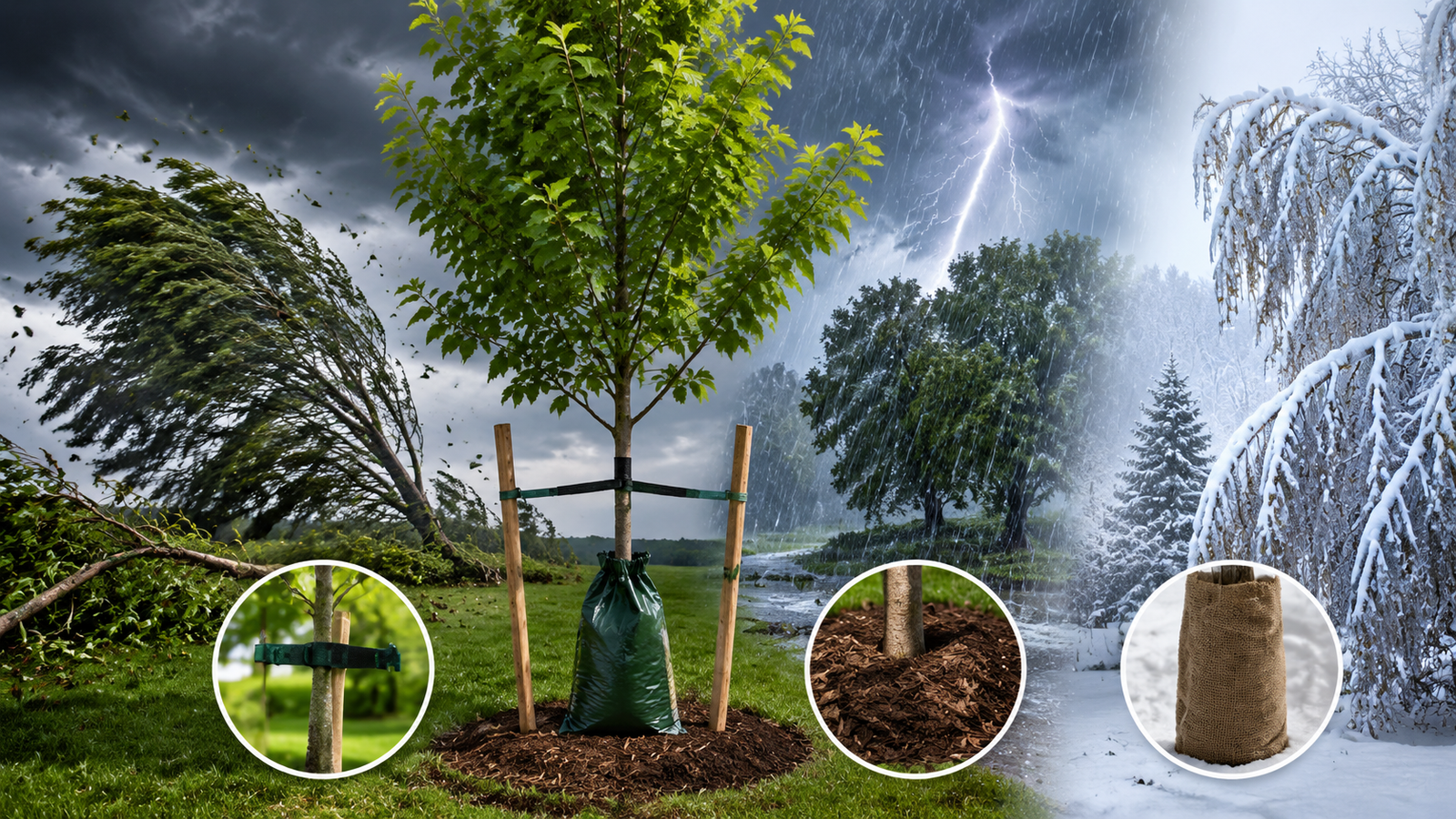
Extreme weather in the UK isn’t a rare event anymore, it’s the new normal. The 2023–24 season delivered the most named storms in a single year since the Met Office’s naming scheme began, and Storm Éowyn alone (January 2025) left over 2.3 million customers without power, with Dyfed-Powys Police declaring a major incident due to fallen trees. A few weeks earlier, Storm Darragh had triggered the UK’s rare red wind warning, bringing 96mph gusts and flattening trees across Wales, the West and beyond.
For homeowners in Hull, East Riding and the wider Humberside area, this matters. Our exposed, low-lying landscape and proximity to the North Sea mean trees here face a real annual battering, not just from winter storms, but from summer heatwaves, sudden floods, freezing snaps, and the heavy snowfalls that occasionally sweep in off the coast.
The good news is that most weather-related tree damage is preventable. A few seasonal habits, the right pruning at the right time, and a willingness to spot problems early can be the difference between a healthy tree that bends in the wind and a 40-foot ash dropping through your roof at 2am.
This guide from the team at Hull Tree Surgeon walks you through exactly how to protect your trees from every kind of extreme weather the UK throws at them, storms, heavy rain, drought, heatwaves, freezing temperatures and heavy snow.
Why Extreme Weather Is So Dangerous for Trees
Trees are remarkably resilient, but they have limits. Each type of extreme weather attacks them in a different way:
- High winds put enormous pressure on the canopy. Trees with dense, top-heavy crowns act like sails, transferring force down the trunk and into the roots, sometimes more than the tree can take.
- Heavy, prolonged rain saturates the soil and loosens the root anchorage. This is why many trees fall after the storm has passed, not during it, the ground itself can no longer hold them upright.
- Heatwaves and drought stress the tree from the inside, weakening branches, drying out roots, and making the tree far more vulnerable to disease and pests.
- Snow and ice add weight that branches simply weren’t designed to bear, particularly on evergreens and dense deciduous canopies.
- Sudden freezes can split bark, kill new growth, and damage roots, especially on younger trees.
Understanding this is the foundation of protection. You’re not just guarding against “bad weather” in general, you’re addressing different threats with different solutions.
Before the Weather Arrives: Year-Round Foundations
The single most effective thing you can do to protect your trees is to keep them well-maintained all year. A healthy, properly pruned, structurally sound tree will survive weather that destroys a neglected one.
1. Get a Professional Tree Inspection
A trained tree surgeon can spot risks the average homeowner simply can’t see, internal decay, weak branch unions, root issues, fungal infections, and structural defects that turn deadly under wind load. If you have mature trees on your property, an annual inspection is the most valuable single thing you can do.
Warning signs to look for yourself include:
- Dead, hanging, or cracked branches in the canopy
- Cavities, fungi (such as bracket fungi), or soft, peeling bark on the trunk
- Cracks or splits at branch junctions
- A noticeable lean that wasn’t there before
- Lifting soil, exposed roots, or cracks in the ground around the base
- Bare patches where leaves should be in summer
If you’re unsure what you’re looking at, our tree surgery team in Hull can carry out a full inspection and tell you honestly what’s safe, what needs work, and what to leave alone.
2. Prune for Strength, Not Just Appearance
Strategic pruning is the most important storm-defence work you can do. It strengthens the tree’s natural structure and reduces the surface area exposed to wind.
- Crown thinning removes selected smaller branches throughout the canopy, allowing wind to pass through rather than push against the tree.
- Crown reduction lowers the overall height and spread, reducing leverage on the trunk and roots.
- Crown lifting removes lower branches to lift the canopy clear of buildings, paths and vehicles.
- Deadwood removal eliminates the brittle, already-dead branches that are first to fail in a storm.
Crucially, pruning has to be done correctly. Bad pruning, particularly “topping,” where a tree is cut back to stubs, actually increases storm risk by encouraging weak, fast-growing regrowth. This is one of the main reasons we recommend using a qualified tree surgeon rather than a general gardener.
3. Strengthen the Roots
A tree is only as stable as its root system. Healthy roots = a tree that stays standing.
- Mulch the base with a 5–7cm layer of organic mulch, kept clear of the trunk itself, to retain moisture, feed the soil, and protect roots from temperature extremes.
- Avoid soil compaction around the base, don’t park, pile materials, or drive over the root zone.
- Don’t cut surface roots when landscaping; even small wounds can let in decay that destabilises the whole tree years later.
4. Consider Bracing and Cabling for High-Value Trees
For larger, older, or particularly valuable trees, especially those with co-dominant trunks or heavy lateral limbs, a tree surgeon can fit non-invasive steel cables or rods to redistribute load and reduce the chance of failure. It must always be installed by a qualified professional; done badly, it does more harm than good.
Protecting Trees from Storms and High Winds
Storm season in the UK runs roughly from October through March, and it’s when most serious tree-failure incidents happen.
Before the Storm
- Book preventative pruning in early autumn, well before the first storms arrive. This is the time of year tree surgeons get busiest, so plan ahead.
- Walk around your trees and look for the warning signs above. Pay particular attention to anything overhanging your house, conservatory, garage, car, fence or your neighbour’s property.
- Move garden furniture, bins, trampolines, BBQs and pots out from under the canopy. Most “tree-damaged” property in storms is actually damaged by lighter objects flung around by the wind.
- Check newly planted trees, make sure stakes and ties are secure but not strangling the trunk.
During the Storm
Stay inside and away from windows facing large trees. Don’t go out to inspect or “save” anything until the weather has properly passed, wind speeds and gust direction can change suddenly.
After the Storm
The danger isn’t over once the wind drops. Trees can fail days after a storm because saturated ground gives way or hidden cracks finally fail. Walk your garden carefully and look for:
- New leans where there wasn’t one before
- Lifting soil or exposed roots
- Cracked branches still attached to the tree (these are called “hangers” or “widowmakers” extremely dangerous)
- Splits in the trunk or major limbs
- Sections of bark that have peeled away
Never attempt to clear large fallen or damaged trees yourself. They store enormous amounts of pent-up energy and can spring, roll or drop unpredictably the moment they’re cut. This is exactly the situation our emergency tree services in Hull are designed for, we can be on-site quickly, with the right equipment to make things safe.
Protecting Trees from Heavy Rain and Flooding
Hull and East Yorkshire are no strangers to heavy rainfall. Waterlogged soil is one of the biggest reasons trees come down in the UK, even without strong winds.
- Improve drainage around the base of vulnerable trees, particularly those in heavy clay soils common to parts of the region. Adding grit or sharp sand to planting holes (for younger trees) helps water move through.
- Don’t pile mulch against the trunk, it traps moisture and encourages rot at the base, the very part of the tree that needs to stay solid.
- Watch for root plate movement after prolonged rain: a small crack in the ground on one side of the trunk, or soil that suddenly looks “lifted,” can mean the tree is starting to fail.
- Avoid working the soil around trees when it’s heavily saturated, compacting wet soil damages root structure for years.
If a tree starts leaning after heavy rain, even slightly, treat it as urgent. The roots are losing their grip, and the next gust of wind may be all it takes.
Protecting Trees from Heatwaves and Drought
UK summers have been getting hotter, and 40°C is no longer a theoretical possibility. Drought is now a real threat to British trees, and a heat-stressed tree is a weak tree heading into the next winter storm season.
- Water deeply, not often. A long, slow soak that reaches the root zone is worth ten light sprinklings on the surface. For a mature tree, that’s around 100–200 litres at a time during severe dry spells.
- Mulch generously before summer begins. A good organic mulch layer can reduce soil moisture loss by up to 70%.
- Prioritise young and newly planted trees. They have small, shallow root systems and dehydrate fast. Water them every few days during dry spells for their first two to three years.
- Watch for stress signs: leaves yellowing, browning at the edges, wilting in the morning (not just the afternoon), or dropping early in summer. These mean the tree needs help immediately.
- Don’t prune heavily in summer drought. A stressed tree doesn’t have the resources to heal large wounds. Save major work for the dormant season.
Protecting Trees from Snow and Ice
Hull doesn’t get snow every year, but when it arrives off the North Sea, it can arrive heavily. Wet, settling snow is many times heavier than dry powder, and a single overnight fall can split branches that survived a decade of storms.
- For young or vulnerable trees, gently brush snow off branches with a soft broom, working upwards from below so the branch springs up, not down. Never shake the tree or knock the branches sharply, frozen wood is brittle and breaks easily.
- Never use hot water to melt ice off branches. The sudden temperature change damages bark and tissue.
- Don’t pile cleared snow against tree trunks. This causes rot and gives cover to rodents that gnaw the bark over winter.
- Avoid de-icing salt near tree roots. Road salt run-off is a leading cause of long-term tree decline in front-garden trees near pavements and driveways.
Evergreens, conifers and dense hedges are particularly prone to snow damage because they catch and hold the load. Our hedge trimming service before winter helps thin dense growth so snow can fall through rather than build up.
Protecting Trees from Frost and Freezing Temperatures
Sudden hard frosts, especially late spring frosts after early growth, can do serious damage.
- Wrap the trunks of young trees with horticultural fleece or hessian during severe cold snaps, particularly for fruit trees and recently planted specimens.
- Apply a thicker autumn mulch layer (around 7–10cm, still clear of the trunk) to insulate roots.
- Water before a hard freeze. Moist soil retains heat far better than dry soil, protecting roots from the worst of the cold.
- Don’t prune just before a frost. Fresh cuts are vulnerable. Time pruning for late winter or very early spring, before the sap rises, or for late summer once growth has hardened off.
- Check for frost cracks on trunks in spring, long vertical splits caused by rapid temperature changes and consult a tree surgeon if you find any large or deep ones.
Special Care for Newly Planted Trees
Young trees are by far the most vulnerable to every type of extreme weather. Their root systems are small, their trunks are slender, and they haven’t had time to develop the structural strength of a mature specimen.
- Site them carefully: Considering prevailing winds and shelter from existing buildings, fences or established trees.
- Stake them properly: Low staking (around a third of the way up the trunk) lets the tree flex and develop its own strength, which is far better for long-term stability than a tall, rigid stake.
- Check ties regularly: So they don’t strangle the trunk as it grows.
- Water consistently for the first two to three years, this is the make-or-break period for a tree’s lifetime resilience.
- Apply mulch annually: To feed the soil and conserve moisture.
When to Call a Professional Tree Surgeon
Some signs need professional attention quickly, not next week. Call a qualified tree surgeon if you notice:
- A tree leaning that wasn’t leaning before
- A large branch cracked or hanging
- Roots lifting out of the ground
- Cracks or splits in the trunk
- A tree dangerously close to a building, vehicle, road or power line after a storm
- Any tree on or near your property after a major storm event
Trying to handle storm-damaged trees yourself is genuinely dangerous, chainsaw injuries, falls, and “spring-loaded” branches cause serious accidents every year in the UK. A qualified, insured tree surgeon has the training, equipment and experience to deal with these situations safely.
At Hull Tree Surgeon, we offer fully insured, professionally qualified tree care across Hull, Beverley, Cottingham, Hessle, Anlaby, Willerby, Brough and the wider East Riding area. Whether you need a routine inspection, preventative pruning before winter, or urgent help after a storm, we’re here to keep your trees and your property safe.
Build a Year-Round Tree Care Calendar
The most resilient trees aren’t lucky, they’re cared for. A simple yearly routine looks like this:
- Spring: Inspect for winter damage. Check ties on young trees. Watch for frost crack and unusual leaning. Don’t prune large branches once buds have broken.
- Summer: Water deeply during hot, dry spells. Mulch if you haven’t already. Monitor for pests and disease.
- Autumn: This is the most important season. Book preventative pruning, tree surgery work and inspections before storm season really kicks in.
- Winter: Check on trees after each storm. Brush snow off vulnerable branches. Avoid major pruning during deep freezes.
A small amount of work each season prevents the kind of emergency call-out that costs hundreds, threatens your home, and removes a tree that could have lived for decades more.
Frequently Asked Questions
Should I prune trees before a storm?
Yes, but ideally weeks or months before, not the day before. Preventative pruning in late summer or autumn allows wounds to begin healing before storms arrive. Emergency pruning right before a forecast storm is rarely advisable unless there’s a clearly dangerous branch, and even then, a professional is far safer than tackling it yourself.
Are some trees more storm-resistant than others?
Yes. Oak, beech, hornbeam, and field maple tend to be more wind-resilient when properly maintained. Trees with shallow root systems (such as some birches and willows in waterlogged soil), brittle wood (silver birch, some poplars), or dense top-heavy canopies tend to fail more easily. Site, soil and maintenance matter more than species, however, a well-cared-for “weak” tree will often outlast a neglected “strong” one.
My neighbour’s tree looks unsafe. What can I do?
Speak to them first, they may not have noticed. If they refuse to act and the tree is genuinely dangerous, your local council can investigate under the Highways Act or relevant nuisance laws. For tree preservation order (TPO) trees or trees in conservation areas, additional rules apply. A professional tree surgeon can advise on the legal route as well as the practical one.
Is it safe to plant new trees during storm season?
Autumn (October–November) is actually one of the best times to plant trees in the UK, as the soil is still warm and roots establish before spring growth begins. The exception is during prolonged wet, waterlogged spells, waiting for the soil to drain.
How often should mature trees be inspected?
Every one to two years for healthy mature trees, and every year for any tree near a building, road, public path, or boundary. After any major storm, do a quick visual check yourself and call a tree surgeon if anything looks different.
Don’t Wait for the Damage. Protect Your Trees Today.
Extreme weather isn’t going anywhere and trees that haven’t been cared for properly are always the first to fail. Whether you need a preventative inspection, seasonal pruning, emergency tree work after a storm, or honest advice on whether a tree needs to come down, Hull Tree Surgeon is here to help.
We’re a family-run, fully qualified team with over 20 years’ experience caring for trees in Hull, the East Riding and surrounding villages. Friendly advice, transparent pricing, and proper professional care for your trees.
📞 Call us on 01482 699534 for a free quote, or get in touch through our contact page and we’ll get back to you the same day.
Comments are closed