
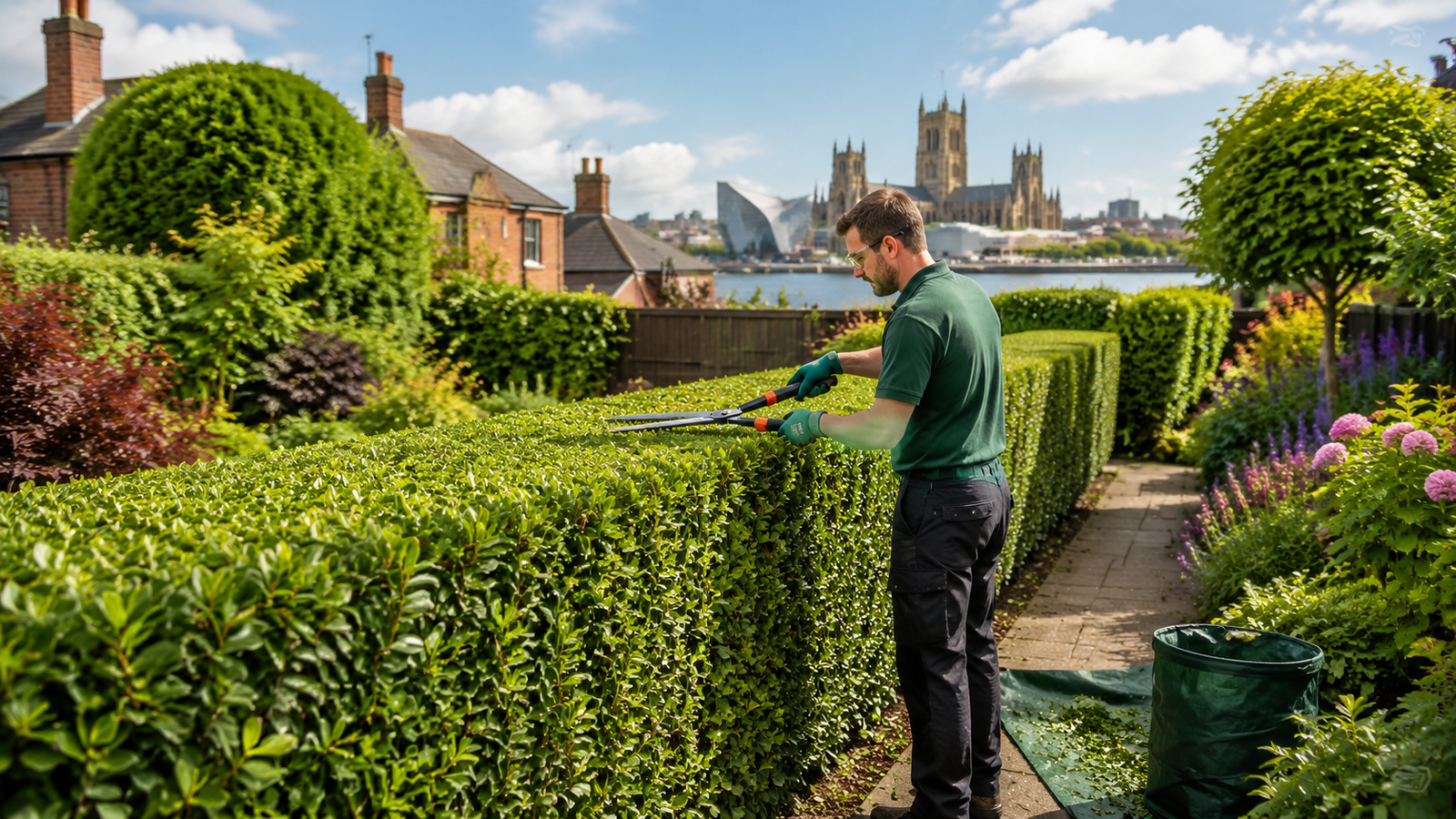
A neat, healthy hedge does more than tidy up the edges of your garden. It softens boundaries, gives you privacy from the street, blocks the wind that whips in off the Humber, and creates a home for the birds and pollinators that bring a Hull garden to life. Get hedge trimming right, and your hedge will reward you for decades. Get it wrong, and you’ll be left with bare patches, weak growth, and a hedge that struggles to recover.
This guide pulls together everything Hull homeowners need to know about hedge trimming, from when to cut and what tools to use, right through to the local conditions that affect hedges in East Yorkshire. Whether you’re tackling a small box hedge in Cottingham or a long boundary line in Beverley, this is the only hedge trimming guide you’ll need.
If you’d rather hand the job to a professional, our hedge trimming team in Hull is just a call away on01482 699534.
Why Regular Hedge Trimming Matters
Many homeowners think of hedge trimming as a cosmetic job, but it’s far more than that. A well-maintained hedge is a healthier hedge, and the difference between a hedge that’s trimmed properly and one that’s neglected is striking.
When you trim a hedge regularly, light and air can penetrate deeper into the foliage. This encourages denser, bushier growth and prevents the bare, woody patches that develop when the inner branches are starved of sunlight. Trimming also stimulates new shoots, which is what gives a hedge that lush, full appearance.
There’s a wildlife benefit too. A dense, well-shaped hedge offers shelter, nesting sites, and food for songbirds, hedgehogs, and pollinators that increasingly struggle to find habitat in urban areas like Hull. Boundary hedges along busy roads (think Beverley Road, Holderness Road, or Anlaby Road) also help capture air pollution and dampen traffic noise, a small but meaningful contribution to a healthier neighbourhood.
For Hull gardens specifically, regular trimming serves another practical purpose. Our coastal climate means hedges grow vigorously through the warmer months, but exposure to wind from the Humber estuary can cause uneven growth and wind damage. Keeping your hedge to a manageable size and shape reduces the surface area exposed to gusts and helps the structure hold up through autumn and winter storms.
Finally, an untrimmed hedge can quickly become a nuisance. Overhanging branches encroach on pavements, block footpaths, damage fences, and provide cover for pests. If a hedge gets seriously out of hand, you may need full-scale tree maintenance rather than a simple trim.
When Is the Best Time to Trim Hedges in Hull?
Timing is the single most important factor in hedge trimming. Cut at the wrong time, and you’ll either remove next year’s flowers, expose tender new growth to frost, or worst of all disturb a nest of fledglings.
The Bird Nesting Season Is Non-Negotiable
Before anything else, you need to understand UK law. Under the Wildlife & Countryside Act 1981, it is a criminal offence to damage or destroy the nest of any wild bird while it’s in use or being built. The main UK nesting season runs from early March to early August, but some species nest earlier and later.
This doesn’t mean you can’t trim hedges in spring or summer at all, but you must check thoroughly for active nests before cutting. We recommend watching the hedge for several days. If birds are popping in and out repeatedly, there’s almost certainly a nest, and you should delay the trim until the chicks have fledged.
Seasonal Timing for Hull Gardens
Hull’s climate is mild but exposed, which influences the ideal trimming windows for different hedge types:
Late winter to early spring (February–March): This is the best time for major reductions on overgrown deciduous hedges, before the sap rises and growth begins. It’s also a good window for renovating neglected hedges, though severe cuts should be staged over two or three years rather than done in one go.
Late spring to early summer (May–June): Formal evergreen hedges like privet, box, and yew benefit from their first trim around late May, once the spring flush of growth has finished. Always check for nesting birds first.
Late summer to early autumn (August–September): This is the prime trimming window for most Hull gardens. Beech, hornbeam, and most evergreens get their main shape-up now. The nesting season is over, growth has slowed, and the hedge has time to seal cuts before winter sets in.
Autumn (October): A final tidy-up trim is fine for most hedges, but avoid cutting too late as fresh growth won’t have time to harden off before frost.
Avoid trimming in deep winter (November–January): Frost damage on freshly cut surfaces can let disease in, and wet, freezing weather makes the job miserable and dangerous.
How Often Should Hull Hedges Be Trimmed?
Formal hedges (think a crisp privet boundary or a clipped box ball) typically need two to three trims per year to keep their shape sharp. Informal or wildlife-friendly hedges may only need one annual trim, which also benefits flowering and berrying species. Fast-growing hedges like Leylandii can need cutting two or three times a year just to keep them in check.
Hull Hedge Types and Their Specific Needs
Hull gardens contain a wide mix of hedge species, and each has its own quirks. Here’s how to handle the most common ones you’ll find around East Yorkshire.
Privet (Ligustrum): A Hull garden classic. Tolerates heavy trimming and bounces back quickly. Trim two or three times between May and September for a tight, formal look.
Beech (Fagus sylvatica): Holds onto its coppery dead leaves through winter, giving year-round screening. Trim once in late summer (August). Don’t cut beech hard in spring as it can struggle to recover.
Hornbeam (Carpinus betulus): Similar to beech but more tolerant of heavy clay soils, which suits some Hull gardens well. Trim in mid-to-late summer.
Yew (Taxus baccata): A premium formal hedge. Slow-growing but very long-lived. One annual trim in late summer or early autumn is usually enough. Yew is one of the few conifers that will regrow from old wood, making it ideal for restorative pruning.
Box (Buxus sempervirens): Best trimmed in late spring or early summer (May/June) on a dry, overcast day. Avoid hot, sunny conditions which can scorch fresh cuts. Watch out for box blight, a fungal disease that’s increasingly common.
Laurel (Prunus laurocerasus): Vigorous, large-leaved hedge. Cut with secateurs or loppers rather than shears or a hedge trimmer slicing through the big leaves leaves an ugly browning edge. Trim in late spring or late summer.
Hawthorn (Crataegus): A traditional rural hedge species, common on the edges of Hull. Best trimmed in winter when leafless, but only after fledglings have left in summer if cutting then.
Leylandii (× Cuprocyparis leylandii): Fast and dense, but unforgiving. Cut into old brown wood, and Leylandii will not regrow. Stick to trimming the soft green outer growth, twice a year if needed.
Conifers in general: Treat with caution. Most conifers won’t sprout new growth from old wood, so always cut into the green outer layer only. If a conifer hedge has outgrown its space, professional hedge care might be a safer option than risking a permanently damaged hedge.
The Tools You’ll Need for Hedge Trimming
Using the right tool for the job makes hedge trimming faster, safer, and produces a far better finish. Here’s the kit list:
Hand shears perfect for small hedges, soft growth, and detail work. Keep the blades sharp and clean.
Powered hedge trimmer (electric, petrol, or cordless battery) essential for anything over 10 metres or above shoulder height. Cordless models are now powerful enough for most domestic hedges and avoid the hassle of cables.
Secateurs and loppers vital for thicker stems and for large-leaved species like laurel. Sharp, clean cuts heal faster and look tidier.
Residual current device (RCD) is non-negotiable if you’re using a corded electric trimmer. Cutting through your own cable is a real risk.
Sturdy boots, thick gloves, and safety goggles eye protection is essential. Twigs and woody debris fly unpredictably from a powered trimmer.
Ear defenders are useful with petrol trimmers, which are loud enough to cause hearing damage over a long session.
Tarpaulin, old sheet, or large garden waste bag laid under the hedge before you start, this catches the bulk of the clippings and saves an hour of raking afterwards.
String line and canes the secret to a perfectly straight top. More on this below.
Sturdy step ladder, tripod ladder, or platform for taller hedges. Tripod ladders with adjustable legs are far safer on uneven Hull garden ground than standard A-frame ladders.
Rake and broom for clearing up.
A quick safety word: every year, garden accidents involving hedge trimmers and ladders send people to A&E. If your hedge is taller than you can comfortably reach from a stable step ladder, or if it sits near power lines, a phone line, or a public pavement, please don’t risk it. Our tree surgery team in Hull is fully insured, certified, and equipped to handle high or awkward hedges safely.
How to Trim a Hedge: Step-by-Step
Here’s the method we use on every hedge we trim, adapted for the conditions and hedge types you’re most likely to encounter in Hull.
Step 1: Walk the Hedge and Check for Nests
Before a single blade comes out, walk the full length of your hedge. Look for active bird nests, even outside the main nesting season, some species breed late. If you spot a nest, leave the hedge alone until it’s clearly empty.
While you’re walking, note any sections that have grown faster than others, any dead patches, and any obstacles like garden ornaments, water butts, or low fencing that need to be moved out of the way.
Step 2: Visualise the Final Shape
This sounds simple, but it’s where most DIY trims go wrong. Picture the finished hedge in your mind: the height, the angle of the sides, the line along the top. A hedge looks best when it’s slightly narrower at the top than at the base. This is called a batter, and it serves a real purpose: it lets light reach the lower branches, preventing the bottom from going bare and brown.
Aim for about a 10% taper from base to top. So a 1-metre wide base would narrow to 90 cm at the top.
Step 3: Lay Down Your Sheet
Spread a tarpaulin or old bedsheet along the base of the hedge before you start. The cleanup at the end will take a fraction of the time it would otherwise.
Step 4: Set Up Your String Line
For a straight top, hammer a cane into the ground at each end of the hedge. Tie a length of garden string between them at the height you want the finished top to sit. This is the single best tip for getting a professional-looking finish on a hedge top without a string line, even experienced gardeners drift up or down without realising.
Step 5: Trim the Sides First, Bottom Up
Always cut the sides before the top. Start at the base and work upwards in smooth, sweeping arcs, keeping the blades parallel to the face of the hedge. Hold the trimmer at a slight angle outwards to create the batter taper.
If you’re using a powered hedge trimmer, let the weight of the tool do the work. Don’t force it through thick growth, slow down and use loppers or secateurs on anything thicker than a pencil.
Step 6: Trim the Top Last
With your string line in place, run the trimmer along the top of the hedge, keeping the blade just above the string. Step back regularly and look along the length of the hedge from the end where you started; this is the only way to spot dips and humps before they become permanent features.
For taller hedges, keep your ladder stable and never overreach. If you can’t comfortably touch the area you’re cutting, move the ladder rather than stretching.
Step 7: Step Back and Check
Halfway through and again at the end, walk to the far end of the garden and look back. From a distance, you’ll spot any unevenness that’s invisible up close.
Step 8: Clear Up Properly
Bundle the clippings off the sheet into garden waste bags or take them to a council recycling centre. Don’t leave clippings sitting on top of the hedge, they block light and can rot down into the foliage. A leaf blower is brilliant for picking up the small bits a rake misses.
If you’ve ended up with a mountain of green waste, our team handles full removal as part of garden clearance services in Hull.
Common Hedge Trimming Mistakes Hull Gardeners Make
Over twenty years of working on Hull gardens, we’ve seen the same hedge trimming mistakes again and again. Here are the ones to avoid:
Cutting wider at the top than the base. Sounds obvious, but it’s the most common error. The result is a hedge that goes brown and bare at the bottom because no light reaches the lower branches.
Trimming in hot, sunny weather. Fresh-cut leaves scorch in direct sun, especially on box and laurel. Pick an overcast day or work in the cool of the morning.
Cutting flowering hedges at the wrong time. Trim a forsythia in winter and you’ll cut off all the spring flowers. Trim a flowering shrub like hawthorn at the wrong time and you sacrifice next year’s blooms. Always check the species before you cut.
Going too hard on conifers. Cut into the brown old wood of most conifers and the bare patch never fills in. Stick to the green outer growth.
Using blunt blades. Dull blades crush and tear stems rather than cutting cleanly, leaving ragged wounds that are slow to heal and prone to disease.
Skipping the nest check. It’s not just illegal it’s heartbreaking to disturb a clutch of fledglings.
Tackling a job that’s beyond your reach or kit. A hedge taller than your step ladder, or one near power lines, is a job for professionals. The cost of a professional trim is far less than an A&E trip.
Hedge Aftercare: Keeping Your Hull Hedge Healthy Year-Round
Trimming is just one part of hedge care. To keep your hedge in top condition, follow these aftercare steps:
Mulch in late winter or early spring. Apply a 5 cm layer of well-rotted compost, bark, or leaf mould around the base. This locks moisture in, suppresses weeds, and feeds the hedge as it breaks down.
Feed if needed. If your soil is sandy or your hedge looks pale and weak, apply a general-purpose granular fertiliser in early spring before mulching.
Water during dry spells. Hull summers can be drier than people expect, especially with the rain shadow effect from the Pennines. Young hedges (less than three years old) need a deep weekly soak during dry weather. Established hedges only need watering in prolonged drought.
Watch for pests and disease. Box blight, honey fungus, and aphid infestations are all worth catching early. Yellowing leaves, dieback, or unusual growths warrant a closer look.
Prune out dead wood whenever you spot it. Don’t wait for the next scheduled trim dead branches can harbour disease.
When to Call a Professional Hedge Trimmer in Hull
Some hedge jobs are well within the reach of a confident gardener. Others are not. It’s worth calling in a professional when:
- Your hedge is over 3 metres tall, or near overhead power lines.
- The hedge has been neglected for several years and needs a renovation cut.
- You have a long boundary hedge (over 20 metres) that would take a full weekend of solo work.
- You’re dealing with a difficult species like an overgrown Leylandii or a yew that needs reshaping.
- You don’t have the time, the kit, or the inclination and you’d rather spend your weekend doing something else.
- Disposal is a problem. Big hedges generate huge volumes of green waste, far more than fits in a single brown bin collection.
- You need green waste removed completely, dovetailed with broader tree removal services or stump grinding on the same visit.
A professional team will trim your hedge in a fraction of the time, leave a far cleaner finish, and take all the green waste away with them.
Why Hull Homeowners Choose A1 Tree Services for Hedge Trimming
At A1 Tree Services, we’ve been caring for hedges across Hull, Beverley, Cottingham, Hessle, Anlaby, and the surrounding East Yorkshire villages for over twenty years. We’re a local, family-run business, and we know the soils, the climate, and the species that thrive and struggle in this corner of Yorkshire.
When you book us for a hedge trim, here’s what you get:
- A free, no-obligation quote on site
- Fully insured, qualified arborists
- Sharp, well-maintained tools that leave a clean cut
- Complete removal of all green waste, responsibly recycled
- Honest advice if your hedge needs a different approach, we’ll tell you
- Fair, transparent pricing with no hidden costs
Whether it’s a one-off seasonal trim, a full renovation cut on a neglected hedge, or a regular maintenance schedule across the year, we’ll take care of it.
If a tree-related emergency ever crops up storm-damaged hedge or fallen branch blocking a path we offer a fast call-out service across Hull and East Yorkshire too.
Get Your Free Hedge Trimming Quote in Hull
Ready to get your hedges back into shape? Get in touch with A1 Tree Services for a free, no-obligation quote on hedge trimming anywhere in Hull and the surrounding area.
📞 Call us on 01482 699534 📧 Or contact us online for a quick response
We cover Hull, Beverley, Cottingham, Hessle, Willerby, Anlaby, Kirk Ella, Hornsea, North Ferriby, Brough, and all surrounding East Yorkshire villages.
Frequently Asked Questions About Hedge Trimming in Hull
How much does hedge trimming cost in Hull?
Hedge trimming costs in Hull vary depending on the size, height, and condition of the hedge, plus the volume of waste to remove. As a rough guide, a small domestic hedge trim starts from around £80, while large boundary hedges or renovation cuts can run into several hundred pounds. We always provide a free, fixed quote up front with no surprises.
When is the cheapest time to get hedges cut?
Late autumn through to mid-winter (October to January) is typically the quietest time for hedge work, and many tree surgeons offer better availability and sometimes lower rates during these months. The downside is that some hedges (like box and laurel) shouldn’t be cut in deep winter.
Do I need permission to trim my hedge?
For most hedges, no you can trim your own hedge whenever you like, provided no birds are nesting. However, if your hedge contains a tree that’s protected by a Tree Preservation Order (TPO) or sits within a Conservation Area, you may need permission from Hull City Council. If you’re unsure, give us a call.
Can I cut my neighbour’s hedge if it overhangs my garden?
You can legally trim any growth that crosses the boundary onto your property, but only back to the boundary line — you can’t lean over and trim their side. Trimmings legally belong to the hedge owner, so offer them back rather than disposing of them yourself. Always speak to your neighbour first to keep relations friendly.
How do I know if my hedge needs a trim or a renovation?
A trim removes the soft outer growth from the past year and tidies the shape. A renovation involves cutting hard back into older wood to rejuvenate a hedge that’s become overgrown, leggy, or bare at the base. Renovation isn’t suitable for all species; most conifers won’t recover from a hard cut. We can assess your hedge and recommend the right approach.
What do you do with the hedge clippings?
We take all green waste away with us and dispose of it responsibly. Most of it is composted or chipped down for reuse, in line with our commitment to working sustainably across Hull and East Yorkshire.
A1 Tree Services your trusted tree surgeon in Hull for hedge trimming, tree surgery, stump removal, and emergency tree work.
Comments are closed